A retrospective & analysis of the work of Kohei Horikoshi, part 3
Before we get started, want to know something odd? In all of my searching, it seems like no one has translated Horikoshi’s final published one-shot, Shinka Rhapsody. I’ve sourced some raw scans, but honestly there’s nothing fair about me giving an opinion on subpar scans of something I can’t read. The main thing I can say is there’s definitely a running theme in his work about transhumanism, or at least mutant humans in the broad sense of things. The My Villain Academia arc will sort of remind you of this. For as much as I want this to be a complete review, this work is so sparsely regarded that it isn’t even poorly translated. I think we can instead take a little trip to the zoo.
Horikoshi’s very first Shounen Jump serialization, Oumagadoki Doubutsuen (aka “Witching Hour Zoo” or most commonly “Oumagadoki Zoo”) ran for just over a year, starting in 2010 (so just about a year and a half after Shinka Rhapsody), and wound up spanning 5 volumes (37 chapters) all told. The story follows a high school girl named Aoi Hana who is disastrously clumsy, to the point where she has trouble even getting to school each day – her classmates outright bully her over it. We also find out she really loves animals, an obsession she’s channeled into learning, making her almost something of a zoological expert. Seeking a path to self improvement she applies for an open position at the mysterious local zoo that she just happened to find flyers for. Why not?
When she gets there, she finds that not everything is as it seems. The Director (name & title) is a strange, wild-mannered humanoid creature with a rabbit’s head and hectic, unpredictable, almost Looney Tunes-ish proclivities. He reveals to Aoi that the animals in the zoo can all talk, and that he’s been cursed into his present form. The only way to break the curse is to collect animals and make the “world’s greatest zoo”. Aoi finds herself coerced into offering her zoo keeping services, but finds she is (predictably) far too clumsy to carry anything out properly. Still, she impresses with her vast knowledge of the various zoo residents and the empathy she shows for the animals, secures the job, and the story sets off from there.
Right away, the big-gloved, scarf-capelet-clad, rabbit-eared, bunny-themed hero of the story striking a Spiderman pose is frankly kind of hard to downplay as a Deku comparison. Did I mention he mostly fights hand-to-hand, with big, flashy attacks that have names like “Jet Rabbit” and “Rabbit Peace”? His fighting style is, without a doubt, what would ultimately become One for All/Full Cowling, and Shoot Style, but even Deku’s whole hero outfit is a clear homage to this character. What’s funny to me, though, is the mannerisms of The Director (as he’s most often called) actually most clearly mirror Bakugou. He’s brash, rude, and quick to start a fight. And while we’re on the topic – trying to be mindful not to force the issue – I think it’s fair to say Aoi offers up strokes of Uraraka; she’s got a real sense of duty and a penchant for putting in the work.
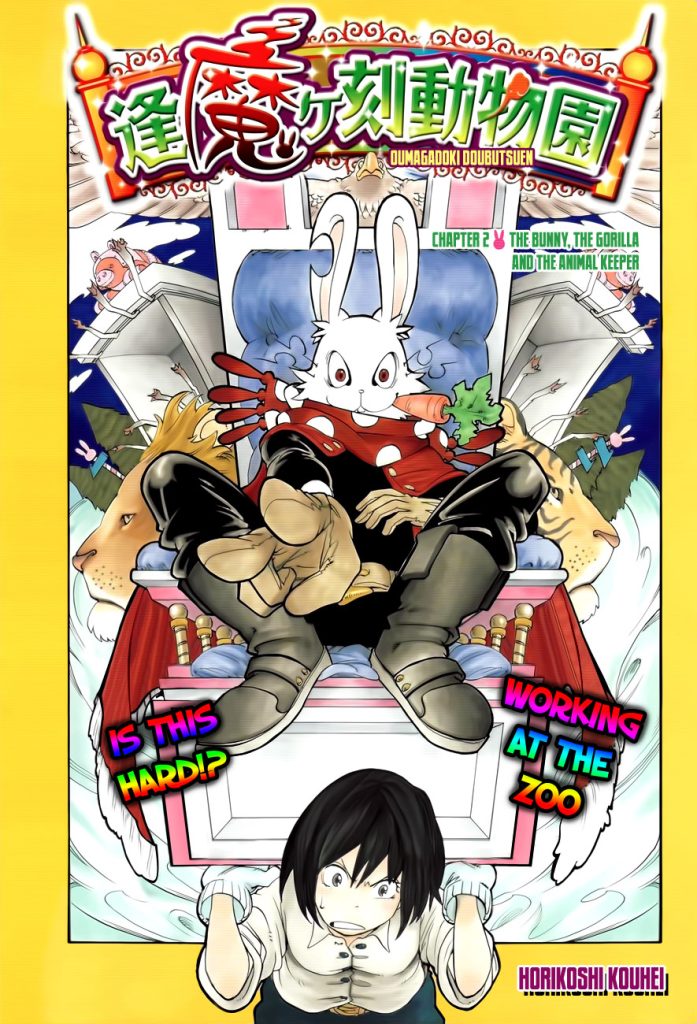
The general styling and themes are full of things you’ll recognize; big gloves and shoes, lots of scarves and baggy clothes. His covers and spreads are full of incredible detail work, and the humor absolutely hinges upon his ridiculous expressions & detailed close-ups. He’s made a lot of commitments to style by this point and it shows in the results, this is undeniably the work of a professional. Gone are the stilted poses, awkward medium shot panels, and slightly uncanny close-ups – this guy evolved in the year since his last one-shot. Add to that, things only improve as this gets further into its run. Some of the spreads are outright jaw-dropping, and I’m really trying not to spoil too much in sharing these, but look too closely at your own peril. I just really felt compelled to maybe entice fans of Horikoshi’s art to check this one out.
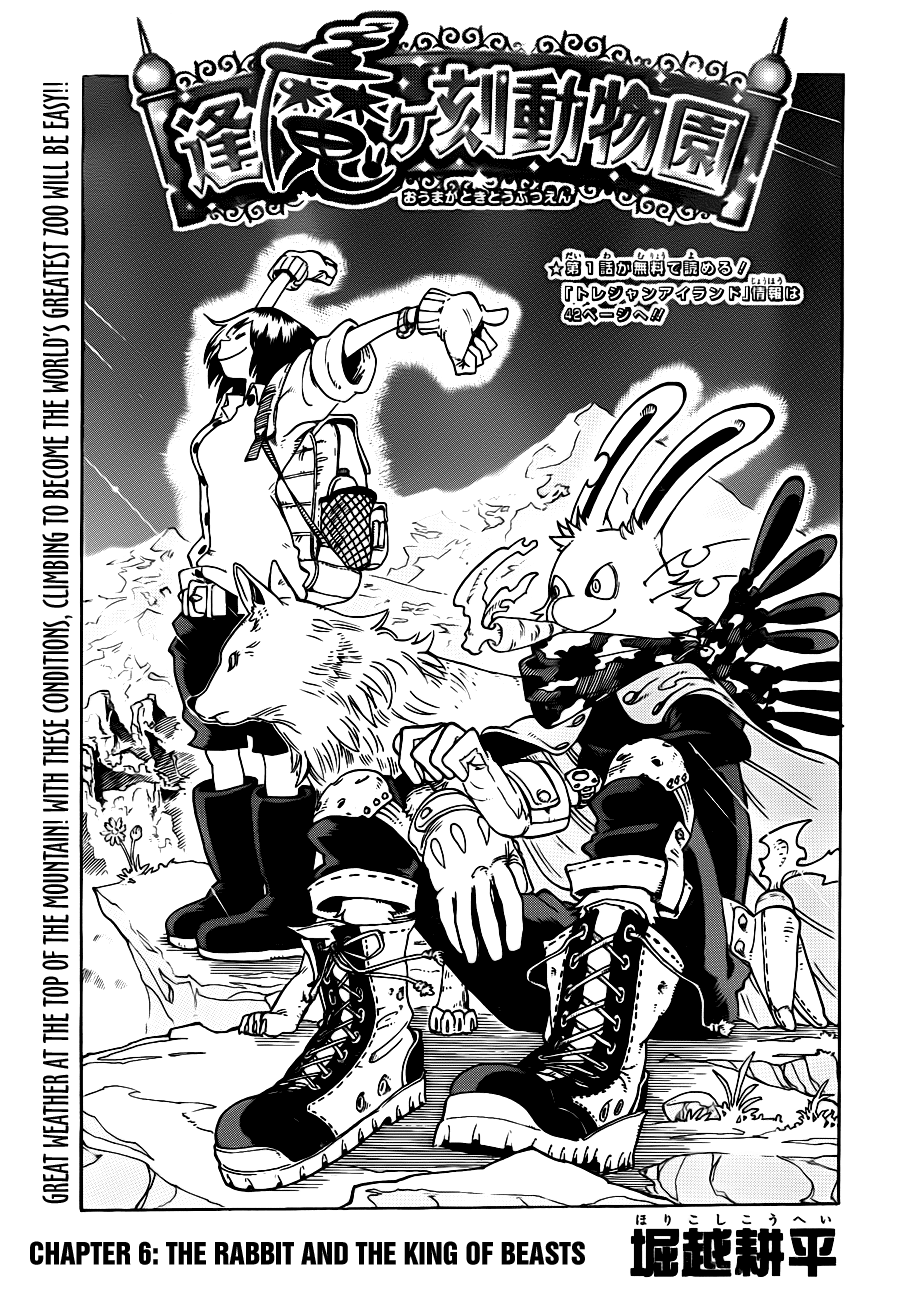
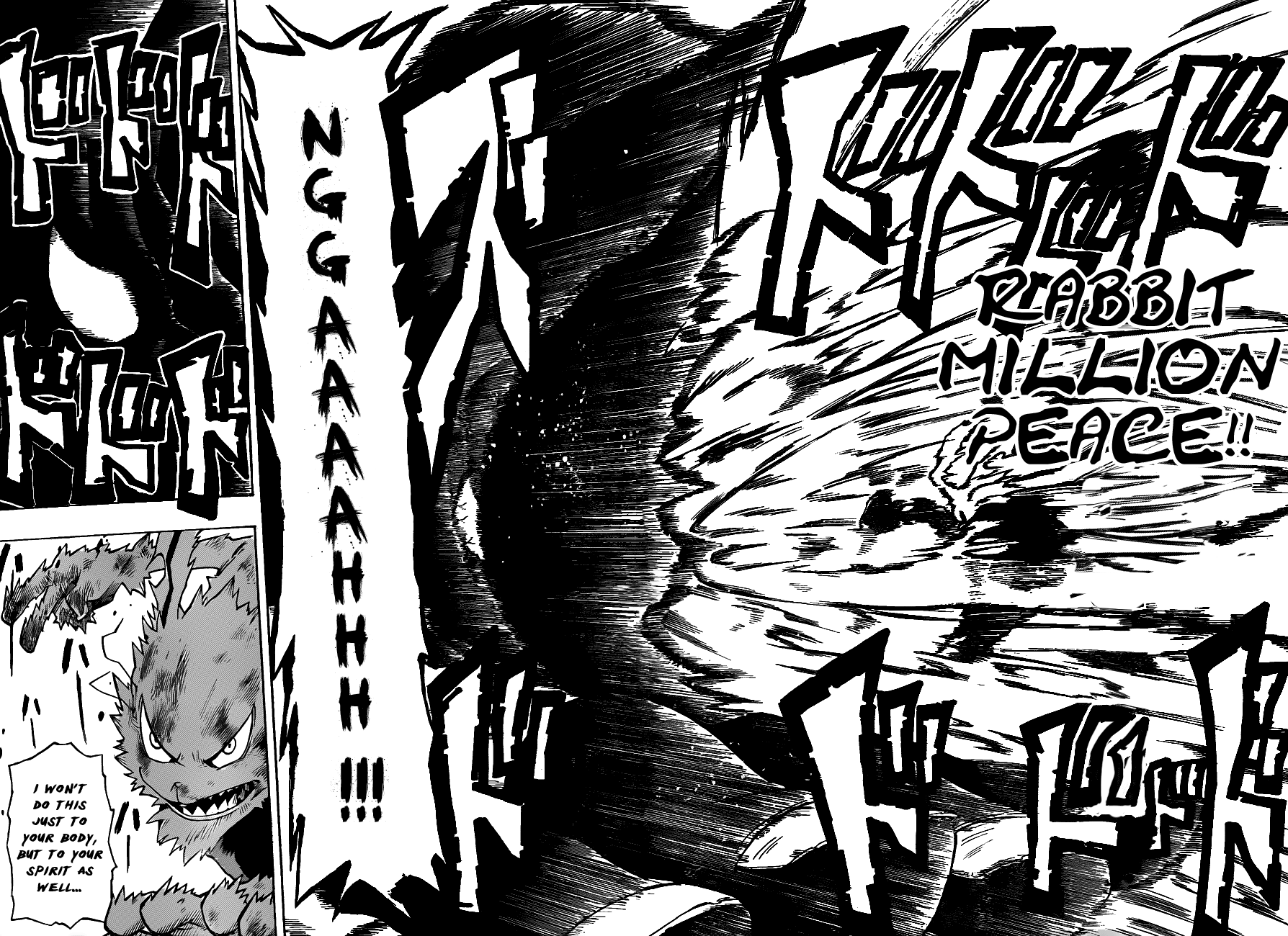
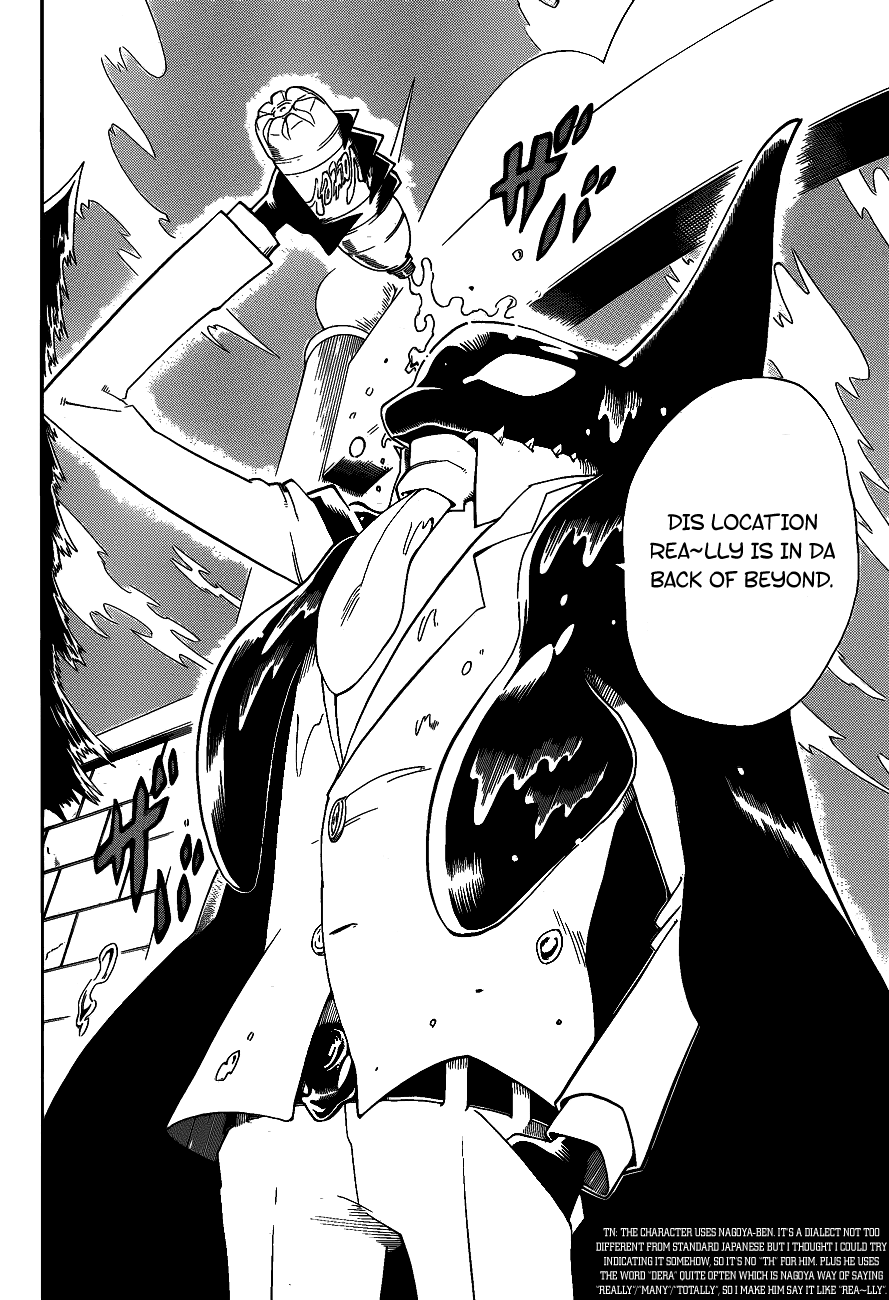
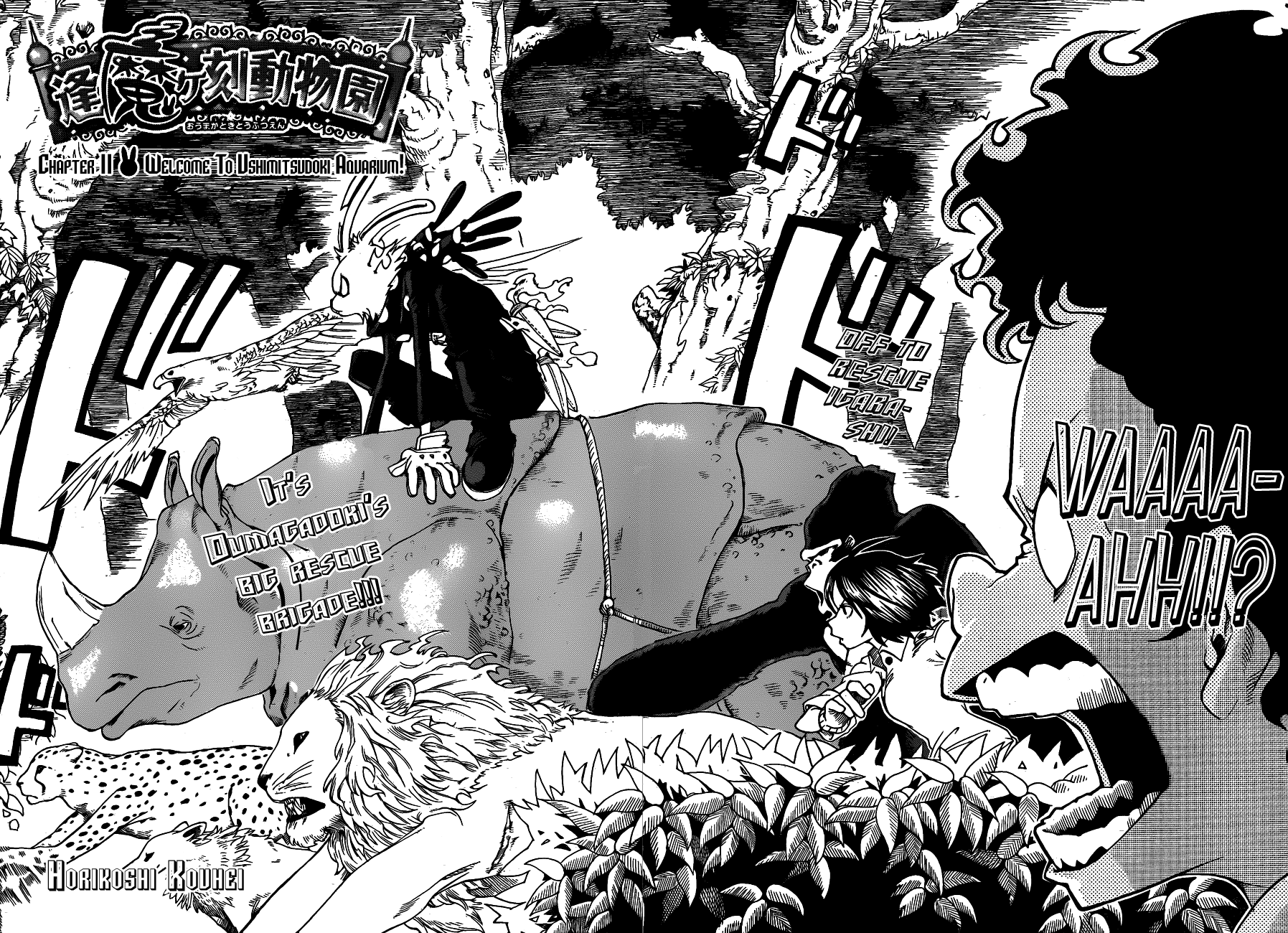
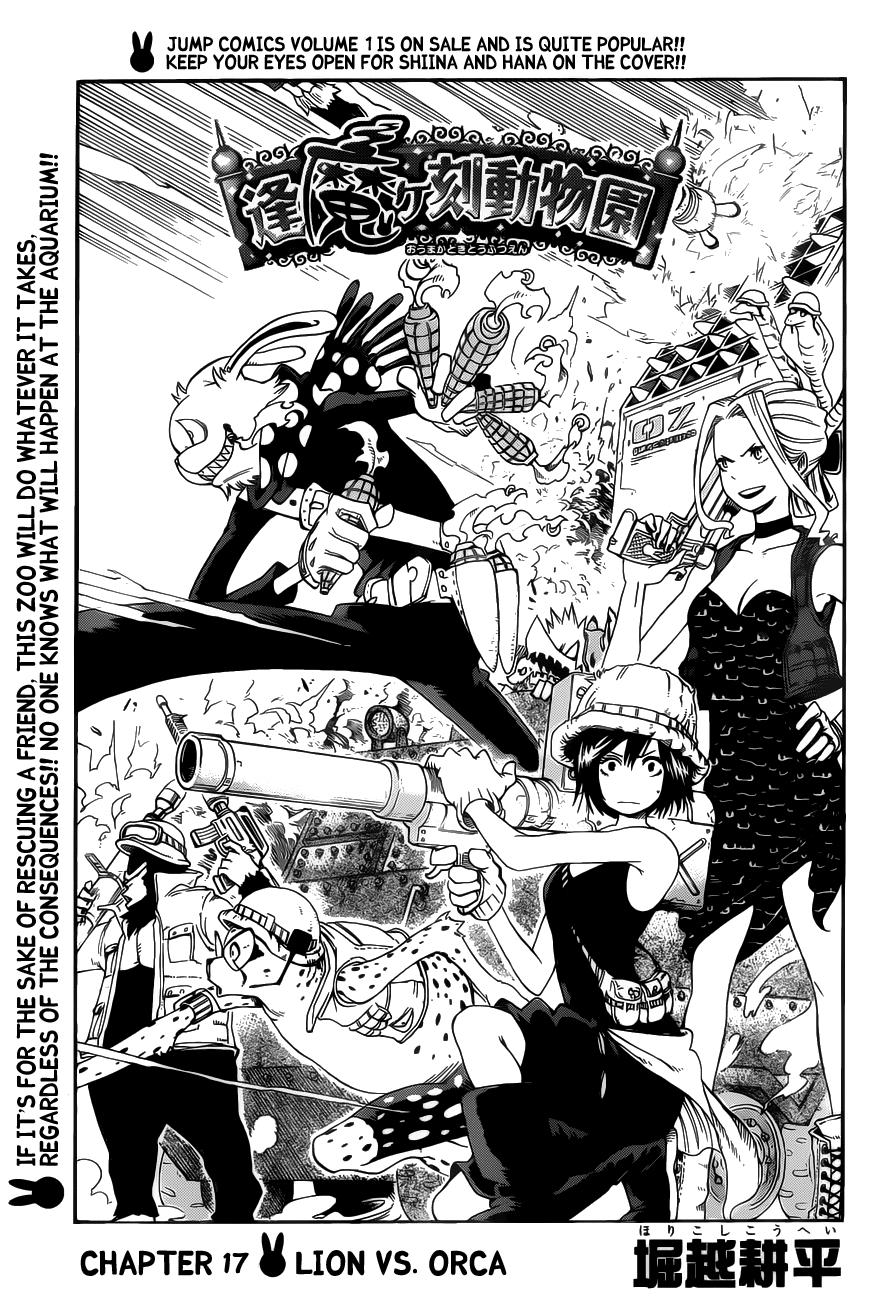
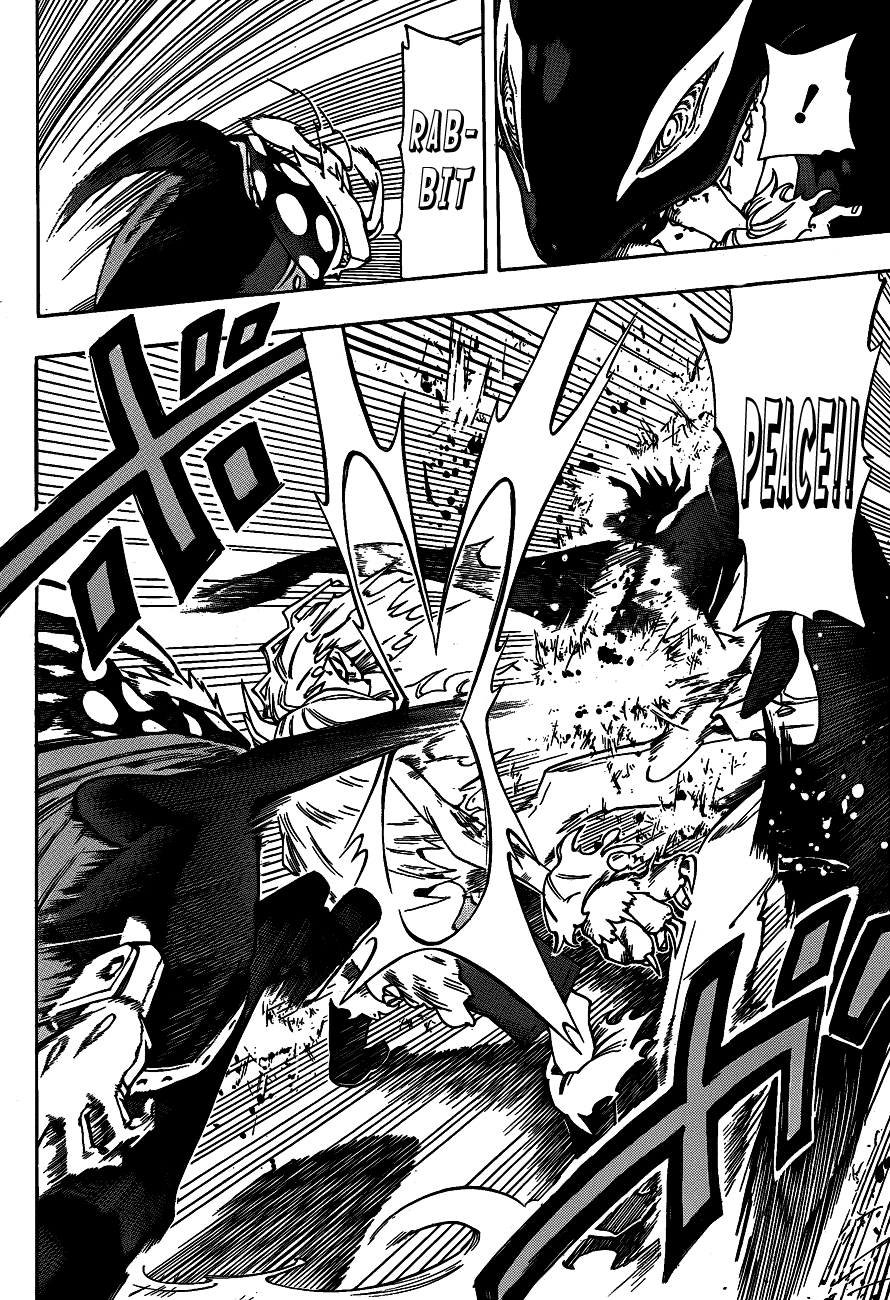
There’s an energy in this work that’s palpable – you can tell Horikoshi is excited to be working on it and is putting in 110%. And more than just direct parallels, I think this series really drives home just how much he likes drawing non-human characters. If Shigaraki’s design was an excuse to draw hands, Oumagadoki Zoo is an excuse to draw animal-people in all sorts of goofy shapes and sizes. Not every design is a hit, but the simple fact that you’ll spot multiple MHA carry-overs in this cast should tell you at least a few of them are solid showings.
A very early chapter details a race between an overweight cheetah and the very hare-like park director, and really that sets the tone for the whole experience. Tonally, the early series most closely matches something like Amagi Brilliant Park (which it predates, funnily enough) or Arakawa Under the Bridge, that sort of “mundane absurdity” where everyday life is warped, but also kept intact by any means necessary. Where it falls short of those series is in selling the setting itself as a character – I’m trying to stay away from critique, but it’s something hard to ignore. Something about it just feels hollow to me, it doesn’t feel lived in or given any weight, which is odd given all the magic supposedly at play.
The middle portion of the series’ run shifts the focus towards becoming a semi-serious battle manga when they run into, of all characters, Gang Orca (probably best known for his tertiary role in MHA) hailing from a rival aquarium operating under similar curse-related circumstances. The invader overwhelms the director and kidnaps a leopard seal from the park, sparking off a retrieval arc where we at least begin to see continuity take shape. I don’t really want to call this “serious” because it’s still not fully taking itself seriously for most of it. Even when it is fully bought into itself, now I’m the problem when I can’t take the talking spider crab seriously. Basically, I sometimes cracked a smile at the absurdity of it, but I’m not entirely sure that was the intent.
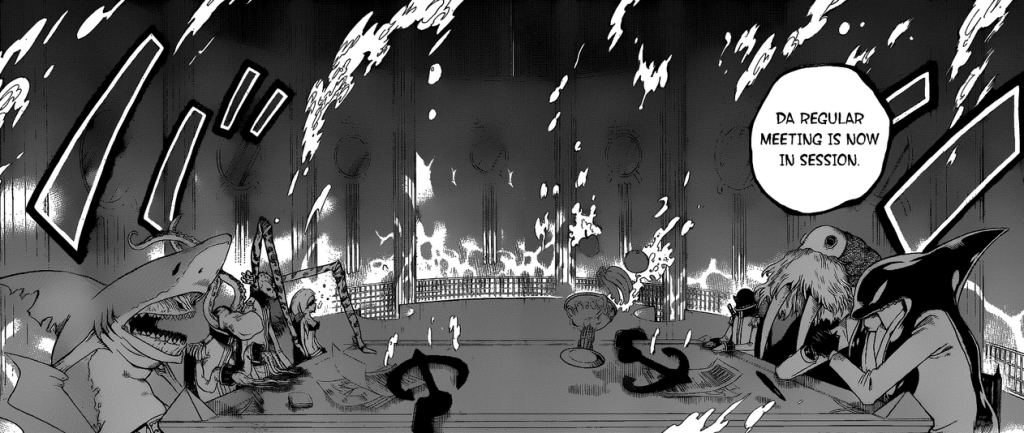

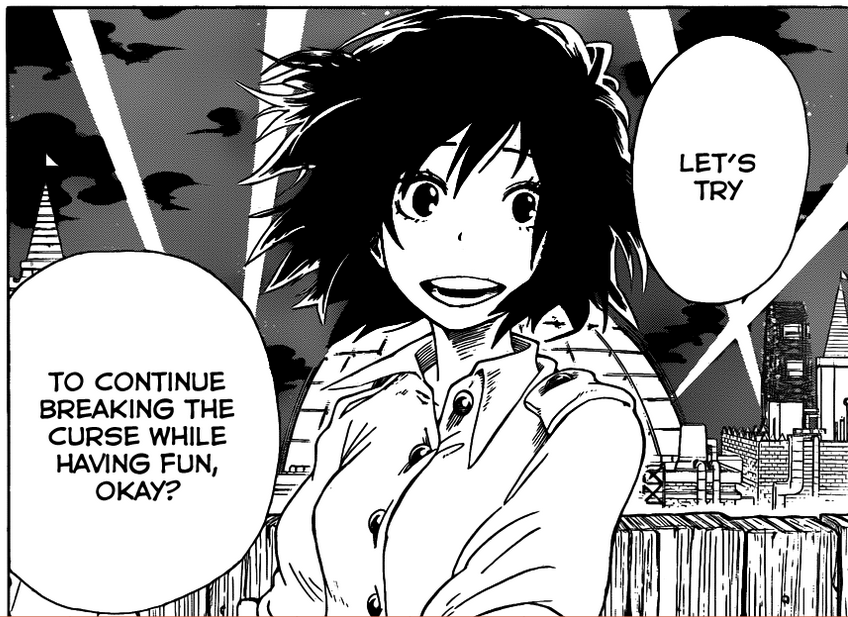
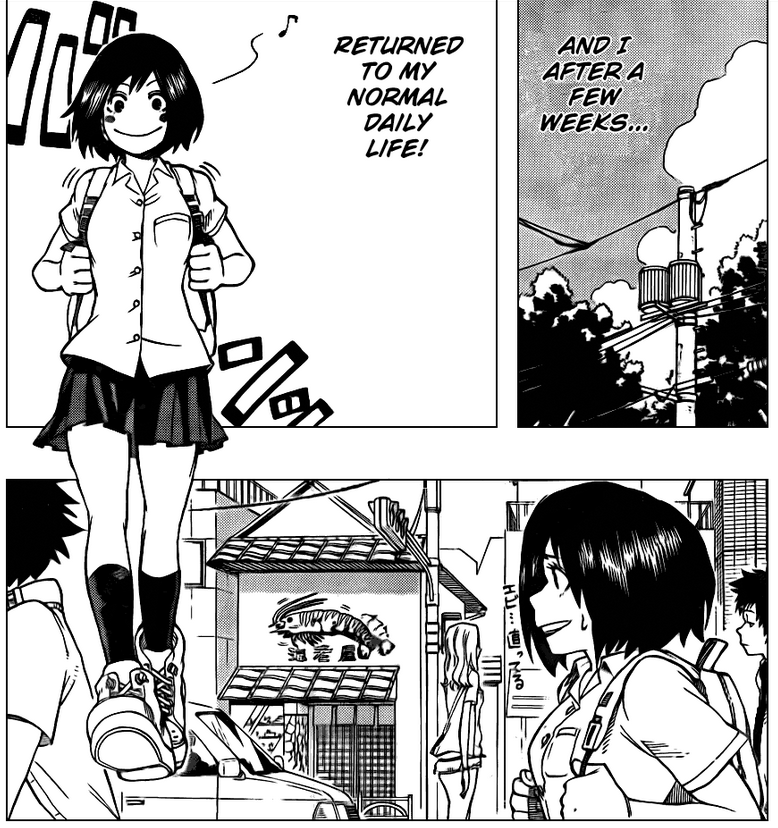
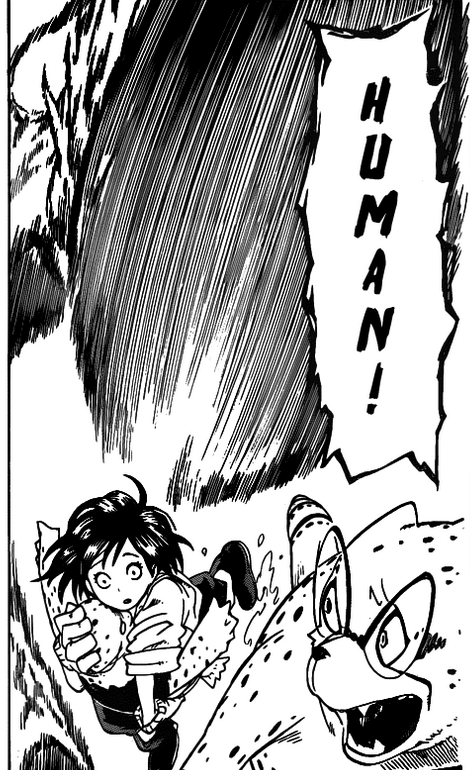
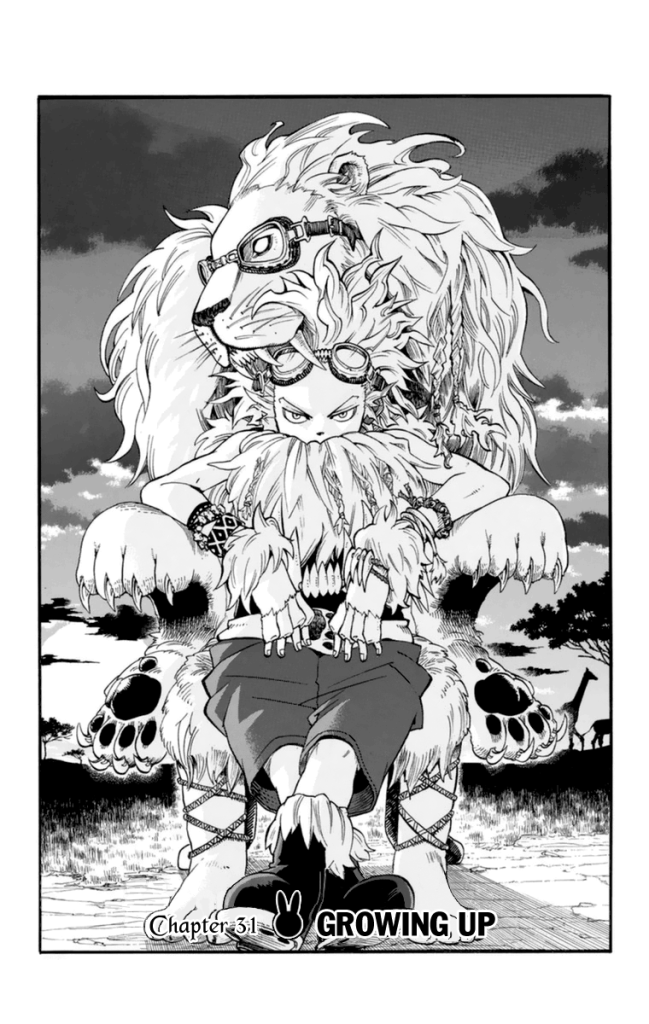
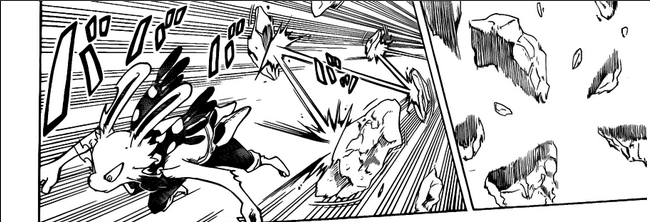
So, if it’s not betting everything on comedy, are the fights at least enjoyable? It’s fair to say they have ups and downs, but the real problem is our overall investment in this as a battle manga. I am, again, trying to steer away from critique but if the fights were strong enough to carry then it simply wouldn’t have gotten cancelled. Still, in terms of Horikoshi’s progress as a mangaka, these fights are leaps and bounds above his earlier efforts. The movement and impact of his action has substantially improved, and the paneling is significantly more thoughtful. As well, some of them are genuinely entertaining and he has a very real dedication (sometimes for the worse) to the gimmick of working animal facts into the fights.
There’s one example in this series where he nails it – the tuna girl is fighting the cheetah and the whole gimmick of the fight involves painting a very detailed image of the arena, and the mechanics of moving around in it for both creatures. (Animal fact of the fight: A cheetah is fast on land, but tuna are much faster in water) Almost as a consequence of that, the whole thing becomes engaging and easy to follow. They chase each other in circles, with the winner ultimately coming down to something more important than speed. It’s a memorable and engaging fight, but it should really be telling that I can’t remember the names of any of the characters, even though one of them is literally just “Chitah”. I’m actively trying not to be critical here, but that should tell you what I think pretty well.


The middle arc of this series would wind up being it’s longest, and through all of that it maintains a fairly steady battle manga heading, where even there it struggles to find its footing. These struggles aren’t me being particularly critical, either, they’re more of a matter of fact, as we’ll get into below. Before we go there, though, I think it’s important to step back for a moment and talk about the creator, rather than the work.
Even for its struggles, Oumagadoki Zoo marks a big step forward for Horikoshi, both as a creator and as a career mangaka. This was his big break, at last, after several years of work and all of the one-shots. Something to keep in mind is that at this point he’s no older than 25. He went straight out of college into chasing this dream of drawing manga, and he’s spent a good part of the last three years as an assistant under Yasuki Tanaka (mangaka behind Hitomi no Catoblepas & Summer Time Rendering). It’s evident he learned a lot during this time, but also it has to be a huge shift to go from that, to being the one ordering around assistants. In one of the bonus volumes for My Hero Academia he talks about what it was like first getting published:
It’s an easy thing to imagine being excited about, but it’s founded on one of the most uneasy publications imaginable. All of this pursuit, self-improvement, and hard work leads him to his reward: contracted publication work. Shounen Jump, in particular, is a gauntlet involving a hellish weekly grind and a fate decided largely by a transient popularity contest. For anyone not acquainted with their processes: the readers essentially get to vote on what their favorite series was each week. This fan vote seems innocuous enough on a cold read, but what it winds up turning into is a chopping block. Series that linger on the low end of the rankings are usually considered to be in danger of imminent cancellation, with cause.
For its entire run, Oumagadoki Zoo only cracked the top-10 twice[1][2]. Both times were when One Piece was absent, and both showings were still bottom three for that week. To say that this series never caught on would be an understatement, and for as excited as he was initially, I can only imagine how crushing it was as the weeks dragged on without much change, even as he tried every which thing to appeal to readers (voters), but you can also sort of feel the guiding hand of the editor reflecting the sagging poll numbers. Plot threads are setup and blown through in a flash, motivations are established and then summarily steamrolled. I mentioned the entire series making a noticeable tone shift, things like that. It starts to feel like it’s trying just a bit too hard, and then ultimately it ends, cancelled.
It’s a shame because you can see the material burning in real time, like everything’s playing at double or triple speed. Moments that may have had some impact wind up whiffing or barely sticking because so much is sacrificed to get to the point that we’ve built up no investment in things. It’s evident Horikoshi had a decently formed long-term vision for this series, and it’s likely he and the publication thought this was taking a fair crack at it. You can see in the progression from the zoo, to the aquarium and eventually the circus, that he definitely had at least some sort of trajectory for things, and if something wasn’t working, they would just move forward. To me, whatever this was supposed to be, it never truly was allowed to be realized. Would it have been worth it to give him the space to flesh everything out and create a world around this? Really that’s more Jump’s problem than anyone’s, but it can’t feel like anything but a shame.
The most surreal thing about this retrospective view is that I’m reading from the tankobon – the completed volumes, as in the collections of these chapters you would find in a bookstore weeks, months, years after publishing. The thing about it is that anything created specifically for these volumes would be from an author who knew this work was dead. The notes in all of the extras (while I’m trying not to read too much into the wording because it’s a translation) all have the tone of that which never was. Ideas left unrealized, and in at least a few cases, ideas drastically changed in editing.
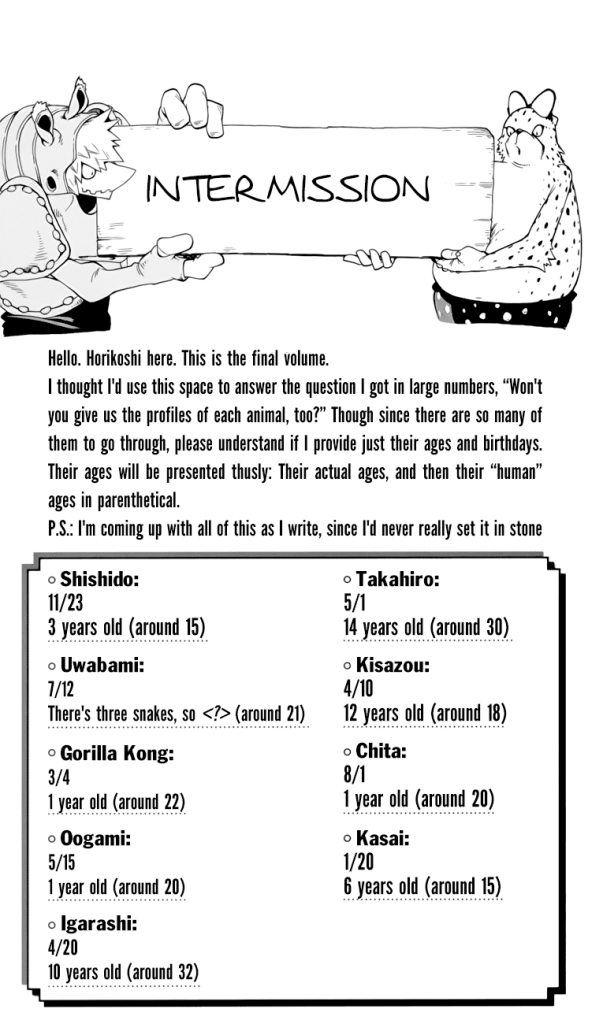
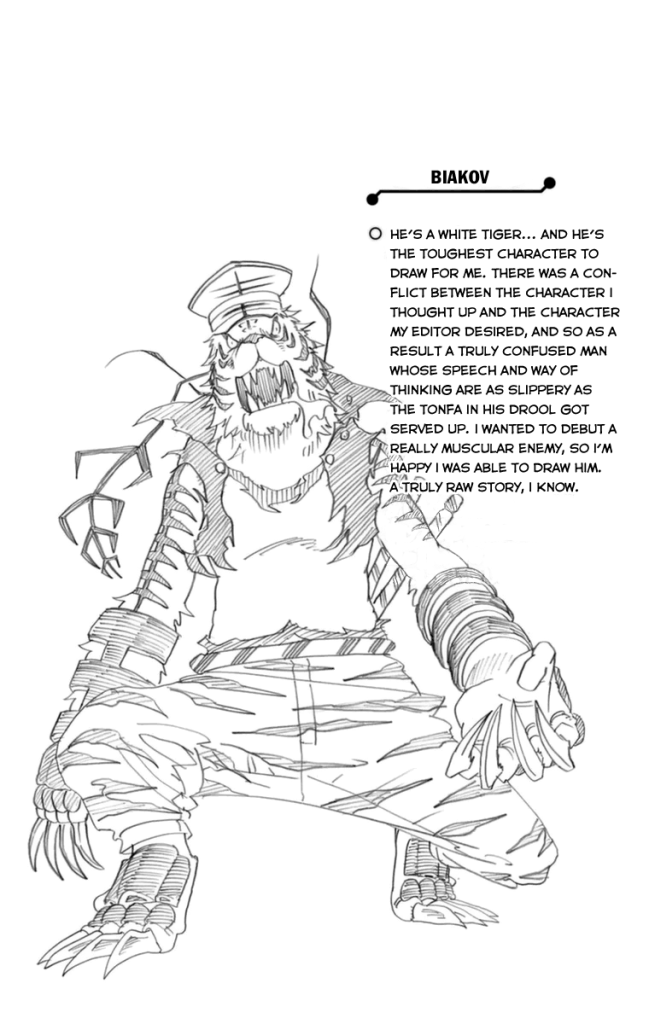
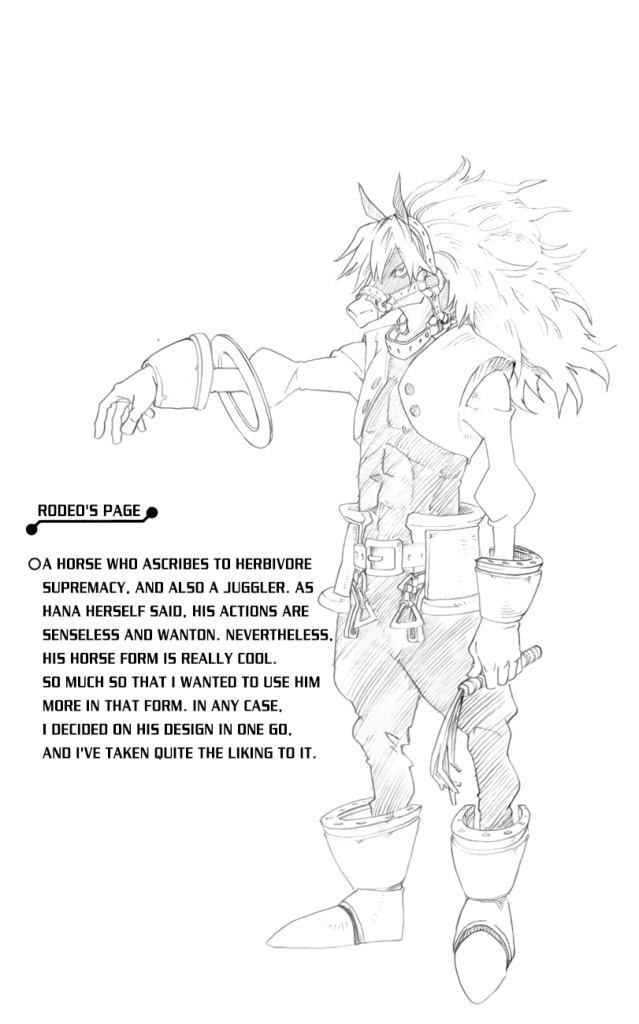
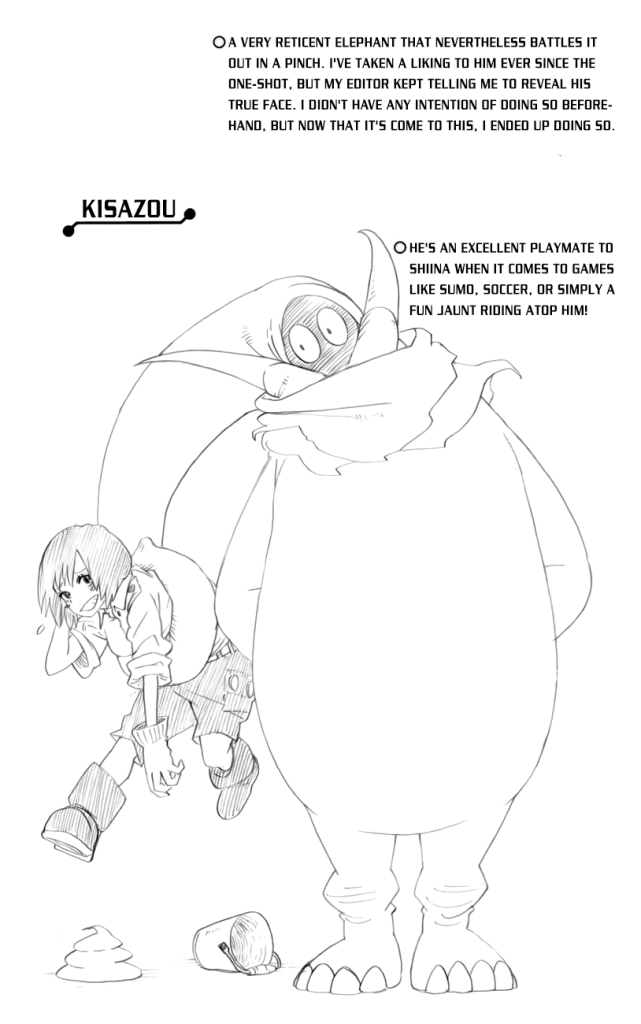
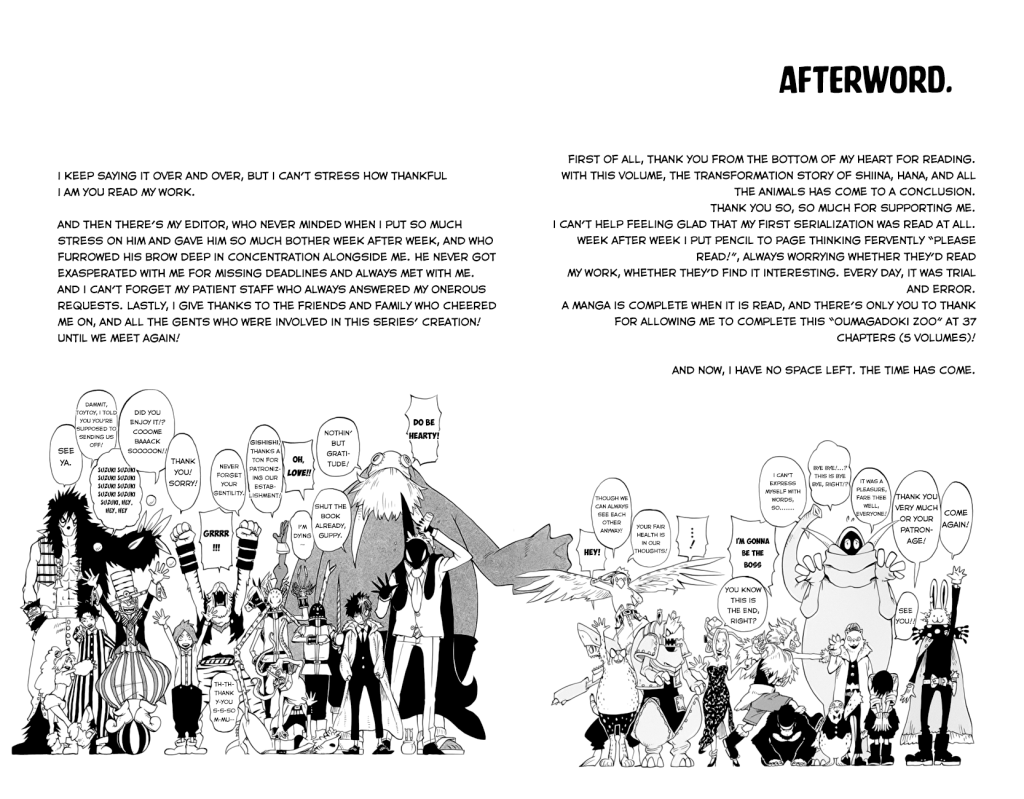
I mean what else is there to say? This was a formative work for him, but also it could only be that because he was aiming way higher. It’s kind of unfair to the effort and hopes of those involved to just slap the ol’ reductionist label of “building block” or “stepping stone” on this, right? I can empathize with the idea of being grateful anyone bothered to listen to what you had to say. It’s a gratitude evident in things like taking an entire page out of a tankobon volume just to satisfy some people who, of all things, wanted more personal details for his original characters. There’s must be no greater compliment, truly, than to have someone so interested in your work that they ask about minutiae.
“A manga is complete when it is read” is a beautiful sentiment that applies to all art. An unfinished canvas, a movie missing scenes, an incomplete manga – all of them can still be art as long as they’re witnessed and the artist’s intent and journey is understood even partially. Ultimately, these are works to be observed, experienced, and consumed by a viewer. It’s always been about making something that might resonate with even one other person, about making something that another might appreciate in some way. I enjoyed my brief time with this series, even if it wasn’t really for the reasons originally intended. I got to learn a bit more about one of my favorite artists & mangaka, and found something in it that motivated me enough to write this.
I think regardless of what anyone could critically say about this work, it’s evident to anyone that Horikoshi has talent at this point. It was evidently talent enough that he would be given a second chance by Shounen Jump just one year later, when he would debut with an ambitious, globe-spanning adventure Barrage. We’ll talk next about second chances.
Thanks for reading.