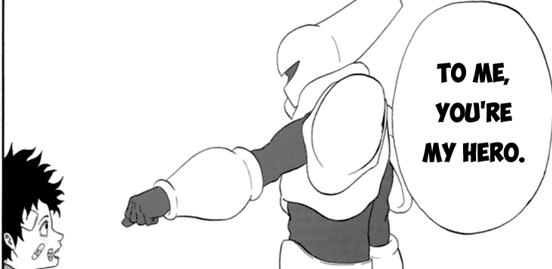
A retrospective & analysis, part 2
I only have sort of gleaning insight into the path to serialization with a major publication like Shounen Jump, mostly picked up from inference (or reading Bakuman). I know these “one-shots” (self-contained, usually single chapter manga) are often regarded as trial runs for new mangaka and their stories. Akamaru Jump (also/now known as Jump NEXT!) is a seasonal publication released three times a year, entirely dedicated to this purpose. It’s presented as a showcase of new talent, featuring only these one-shots. Tenko was featured in the Fall edition in 2007, come Winter 2008 Kohei Horikoshi was back again.
Horikoshi would publish another one-shot, this time titled My Hero. It follows the story of Jack Midoriya, an unassuming salesman who works for a company specializing in gadgets for crime-fighting heroes. Jack moonlights as an unlicensed vigilante using cutting edge gadgets from his employer, making up for his frail disposition. The main threat to the city seems to come from mutants with superpowers called “aberrants”, and the ones who usually fight them are licensed heroes – a job Jack’s illness supposedly disqualifies him for.
I won’t summarize the whole thing, but before long the story winds up crossing paths with the hero “Snipe”, like, the tertiary character from My Hero Academia pretty much 1:1. Snipe himself is rather straight-edge, butting heads with our vigilante over his recklessness. In this abbreviated view of the world, Snipe is our window into the “pros” and he’s sort of an amalgam of what you might expect from the pro hero characters in My Hero Academia. He’s serious and showy, as much character as public servant. Still, it’s a bit hard to get over how he’s just… shooting dudes? And Midoriya was trying to stab them? They seem more like public mercenaries than heroes, but maybe it’s just a very western response to a problem for a western-inspired comic.
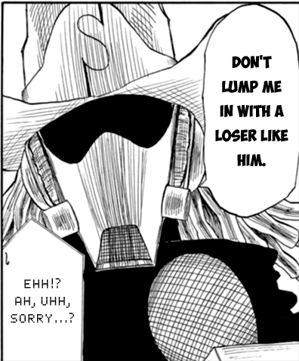
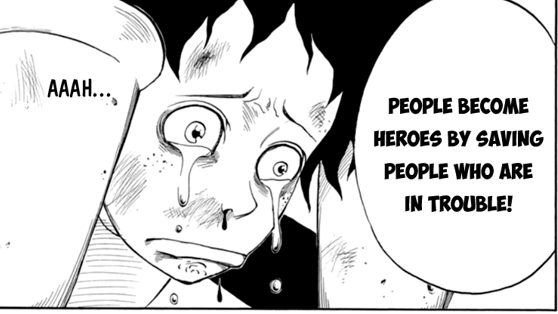
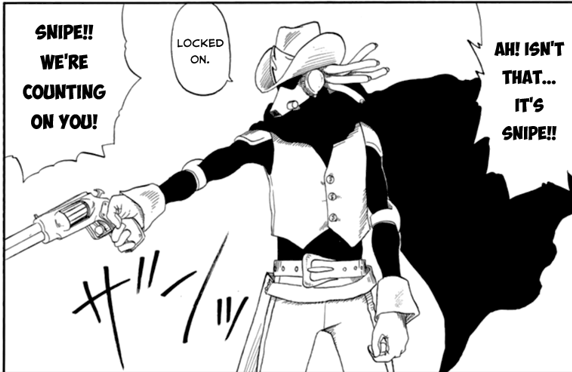
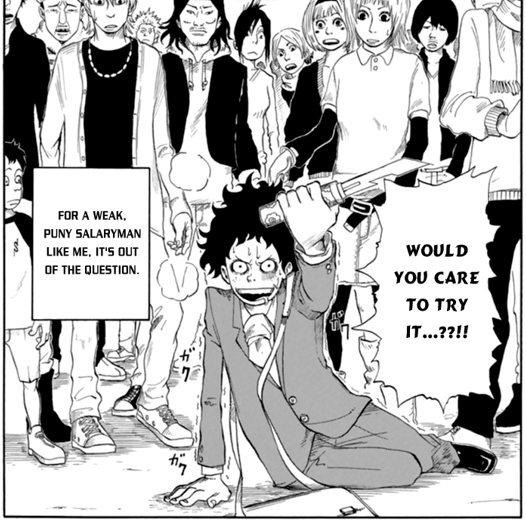
Putting on my critic cap for a second, this one-shot is still quite rough – though vastly improved in both paneling and page flow compared to Tenko from just a year prior. When taken as a whole work, it’s still incredibly endearing, but the first 1/3rd of it drags in the same way most of his intros seem to. It’s hard to get invested until it picks up its full head of steam, and by that point it abruptly ends. Add to that, the emotional climax relies on you rooting for him, but Snipe is a bit hard to like. Midoriya has all this admiration for who Snipe used to be and who he’s become, but we’re never really shown why. There’s all sorts of issues with this one on a cold read. You wouldn’t have been blamed for passing it over at the time, it’s really just majorly lacking in appeal. Midoriya is objectively creepy, Snipe is just a cop with good aim, it’s all basically a non-starter.
Still, the amount of story beats, concepts, and designs from this one shot that would ultimately comprise the intro portion of My Hero Academia is startling. Essentially everything was shifted, split, moved around or readjusted to fit the Shounen Jump brand, but almost all of it was used in some way, shape, or form. Spitballing some examples: The large aberrant they fight looks like the slime monster that tries to take Deku and Bakugo hostage, the idolized hero “Positive” has an outfit that looks just like Iida’s hero armor, and there’s a big take down that is framed and presented exactly like Deku’s first smash attack on the giant robot during the entrance exam. Not an exhaustive list by any means, I’m sure there’s one of those somewhere on the internet. The thing you need to understand is that this thing was broken into pieces and most of them got used.
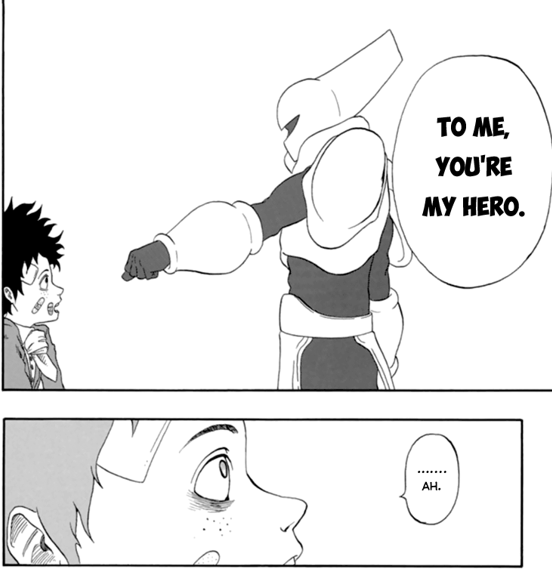
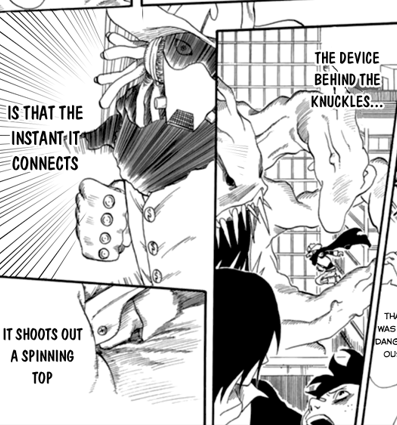
You can kind of see the things that were edited and why, most of them are obvious audience adjustments like making Midoriya a student (and less creepy?). Beyond just that, though, one can infer even more. For instance, Snipe with his dark, sunken eyes and western motif could easily be taken for a prototypical All Might (especially given his role in the one-shot), but the easy-to-draw, featureless face of his helmet also impedes facial expressions, making him, frankly, hard to relate to. The same could be said of Jack’s helmet, often drawn as translucent to allow him to show facial expressions when they aren’t squeezing through the eye slits. How much emphasis does Deku put on a hero’s smile, again? Wouldn’t it be funny if that’s actually an editorial note taken to an extreme?
What’s really difficult in discussing this work in particular, in this particular way, is that the importance of it wouldn’t come until much later. The author of this one-shot couldn’t have made My Hero Academia, he made My Hero, and there’s two serialized works and another one-shot before we have the whole story there. So we’re jumping ahead on this topic a bit, but it’s important to talk about My Hero‘s importance to Horikoshi, get it? There’s an interview in one of the extra volumes for My Hero Academia, around 2019, where the topic of his earlier works came up and Horikoshi offered the following for what role this one-shot played in the ultimate creation of the series:
We’ll go over it in a bit – as I said, we kind of have to talk about his next two works before we can really touch on this further – but I want to contextualize something here. This conversation he’s talking about having with his editor at Jump? It’s in 2013 or maybe 2014, just based on what we know here. They were discussing an otherwise transient one-shot from a side-publication in 2008 as a serious basis for moving forward. This was a man down, but not out, and he was doing some serious self reflection, looking at his whole portfolio, and really thinking of what parts of each thing could be used going forward.
In fact, it seems this one shot in particular would be something he’d revisit whenever he was kinda “going through it”. Again, skipping ahead, but his first serialized work ever, Oumagadoki Zoo, was abruptly cancelled after a run just barely spanning 5 volumes. Perhaps given the opportunity to fill out the 5th and final volume release some, or maybe just trying to go out with his best foot forward, he put the My Hero one-shot at the end along with this note:
However, this one-shot is, to me, my foremost masterpiece. If I can brag, this was my peak. If I ever get the chance, I want to draw it all out again. That’s how emotionally attached I am to it.
The feel and art style are both quite different from Oumagadoki Zoo, but please, have a read.”
Reaching back to what we talked about in the first part of this series, this is a man with characters, scenarios, and worlds in his head that have been there for years. He’s used to them rattling around in there, living in his notebooks and garbage bins. He clearly felt some attachment to this work, and probably all of his works and characters to the degree that he essentially believed in them. When you read back the quote above now, he seems dedicated, because we know he was correct. In many other contexts though, he’d sound like yet another delusional dreamer asking for another chance.
Ultimately, the difference between what people regard as delusion and dedication is execution. It’s similar in a sense to the MHA brand of heroism – it looks either suicidal or hopeful depending on your interest in the situation. Because he was correct, because he came back to this work so many times and eventually molded it into what we got in My Hero Academia, he was dedicated – it’s a retroactive judgement. I do sometimes wonder how many others pour in all this effort, insist that their vision be realized, how many of them wind up serialized? How many even get to publish a one-shot, let alone three? There’s something to be said for “do it first, make it good later” but this is next level work.
Regardless, due to that determined stance, this otherwise unassuming work would become the root from which all of his other tested ideas could sprout. Obvious to anyone though there was still room for Horikoshi to grow, and before hitting it big he would go on to do one more one-shot that’s so obscure I’m having trouble sourcing it. We’ll briefly talk about that one, and then for real next time we’ll talk about his first major work Oumagadoki Zoo.
Thanks for reading.